Preview complete
The prescreener preview is complete. You may now close the preview.
Check your eligibility now & get in touch with a study center
CHECK ELIGIBILITYCheck your eligibility now & get in touch with a study center
CHECK ELIGIBILITYCheck your eligibility now & get in touch with a study center
CHECK ELIGIBILITYCheck your eligibility now & get in touch with a study center
CHECK ELIGIBILITYCheck your eligibility now & get in touch with a study center
CHECK ELIGIBILITYCheck your eligibility now & get in touch with a study center
CHECK ELIGIBILITYIs COPD disrupting your daily life?
If you or a loved one have Chronic Obstructive Pulmonary Disease (COPD), you may be interested in learning more about the PERSEPHONE and THESEUS clinical studies.
Short Summary

Medical Condition:
Chronic Obstructive Pulmonary Disease (COPD)

Participation duration:
Approximately 14 months

Phase:
2b/3
What is Chronic Obstructive Pulmonary Disease (COPD)?
Chronic Obstructive Pulmonary Disease, commonly known as “COPD,” is a lung disease that is usually diagnosed using special breathing tests that measure how well your lungs are working. People with COPD often experience shortness of breath, frequent coughing, tiredness, wheezing, and produce excess mucus. Everyday activities like walking, cooking, or doing chores can become tiring. COPD usually starts after years of damage to the lungs, often from smoking or breathing in air pollution.
There are two main parts of the disease:
Managing COPD involves treating symptoms, preventing flare-ups, and slowing the progression of the disease.
Please answer a few questions to see if you may qualify for a clinical study.
With your consent, we (Trialbee) will collect and use the information you submit here to indicate your interest in participating in a clinical study, and to see if you are eligible to move to the next stage of screening.
During the next stage, you will be contacted by Trialbee to ask some additional questions to further assess your eligibility and discuss clinical study participation.
The prescreener preview is complete. You may now close the preview.
What are the PERSEPHONE and THESEUS clinical studies?
PERSEPHONE and THESEUS are two clinical studies that are testing the same investigational study drug, called lunsekimig. Lunsekimig is a type of medicine that works by targeting specific pathways of inflammation related to some COPD symptoms. The main objectives of these two studies is to learn how lunsekimig impacts:
These clinical studies are investigating how well lunsekimig works for patients with moderate to severe COPD and who are either current smokers or have a history of smoking.
The PERSEPHONE and THESEUS clinical studies are randomized, double-blind, placebo-controlled clinical studies. In these studies, two drug dose regimens are tested. This has no impact on your study visit schedule, but it means that you have 2 chances out of 3 to receive lunsekimig, and 1 chance out of 3 to receive placebo.
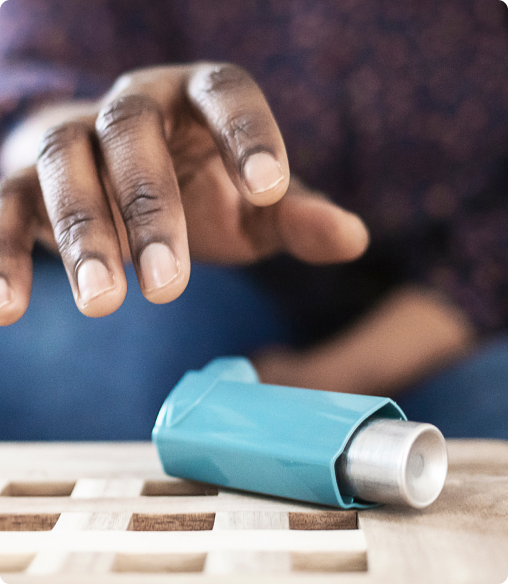
The investigational study drug is not approved by health authorities such as Health Canada and the US Food and Drug Administration and is still under investigation for the treatment of COPD, so its effectiveness and safety have not been established.
Who can participate?
You may be eligible* to participate if you:

Are between the ages of 40 – 80 years old

Have had a diagnosis of COPD for at least 1 year

Are a current or former smoker

Have had at least 2 COPD flare-ups in the last year, or have been hospitalized in the last year for a COPD flare-up

Are taking daily treatments for your COPD
*Please note there are more eligibility criteria that must be met to be considered for participation.
What happens if I participate?
The clinical studies are divided into periods:
Screening Period
(typically between 2 and 4 weeks – [1 study site visit])
The study doctor and team at the study site will assess your eligibility for one of the clinical studies, and the decision to participate will be yours to make. Once specific tests and assessments are completed, and you meet all the required criteria for participation, the treatment period of the clinical study will begin. Throughout your participation, you will also be asked to use an electronic diary (e-diary) once a day to answer a few simple questions about your health and to record the COPD medicines you actually took. Your e-diary will be reviewed with the study team during your study site visits.

Study Treatment Period
(48 weeks – [14 study site visits])
During this period, you will receive either the investigational study drug (lunsekimig,) or a placebo. A placebo will look like the investigational study drug but does not contain any active medications. Both lunsekimig and placebo will be administered as a subcutaneous (under the skin) injection. The study team will provide you with information regarding the likelihood of which one you’ll receive. Neither you nor the study team will know whether you are taking lunsekimig or placebo during the study treatment period. The study treatment period will last 48 weeks and will require 14 visits to the study site. During your visits to the study site, you will receive your injection and undergo additional tests, including blood draws, smoking status checks, and breathing tests conducted by the study team. The study doctor and team will closely monitor your progress.
Follow up Period
(8 weeks – [1 study site visit])
Eight weeks after the Study Treatment Period ends, you will go back to see the study doctor for a safety check-up.
Your study doctor will be able to provide more detailed information on what will happen if you decide to participate.
How do I Participate?
What will happen after I complete the online questionnaire?
Should your online questionnaire suggest that you are potentially eligible, a qualified medical professional will contact you to conduct a more comprehensive telephone medical assessment and further evaluate your eligibility. Upon confirmation of your potential eligibility during the telephone medical assessment, you will be presented with nearby study sites conducting one of the clinical studies. The study site of your choice will be provided with your contact details in order to schedule an appointment to share more information about the clinical studies and learn about your medical history.
Where can I find more information about the PERSEPHONE and THESEUS clinical studies?
If you are interested in learning more about these clinical studies, we encourage you to complete the questions on the pre-screener to help assess if one of the clinical studies could be a match. You can then be referred to a study site in your area for answering all your questions.
What type of study-related medical care is provided during the clinical studies?
Any medical care, tests, or procedures that are for the purpose of these clinical studies will be provided and will be explained by the study site. There is no insurance required to participate. As you will need to visit the study site throughout the duration of the study you are participating in, there will be travel reimbursement available.
Why are clinical studies important?
Clinical studies add to medical knowledge and help bring new potential treatments to patients with medical conditions. To bring new treatments to the public, they need to be assessed in clinical studies, to determine if they work and are safe.
Clinical studies rely on the participation of volunteers. It can take several years for a new potential treatment to reach the public. Often, this timeline is due to how long it takes to complete a clinical study.
All approved prescription drugs have gone through clinical studies to assess their safety and efficacy and to understand what side effects may be involved.
Who runs clinical studies?
Clinical studies can be sponsored, or funded, by pharmaceutical or biotechnology companies, academic medical centres, voluntary groups, or health care providers. These clinical studies are funded by Sanofi-Aventis Canada Inc. a pharmaceutical company.
Every study site is led by a principal investigator, who is usually a medical doctor. Clinical studies also have a research team that may include doctors, nurses, and other health care professionals. An independent committee of people from outside the study sponsor, called an Ethics Committee, reviews and monitors clinical studies to ensure the rights and welfare of clinical study participants are protected.
What are the phases of clinical studies?
Clinical studies are conducted in different phases.
Phase 1: After researchers have investigated the investigational study drug in laboratory tests to assess its efficacy and ensure that it is safe to test in humans, the Phase 1 study is carried out to test the investigational study drug in a small group of patients for the first time. This is done to evaluate its safety, determine a safe dosage range, and identify potential side effects. The investigational study drug is referred to as an investigational study drug since it is under investigation and not yet approved by health authorities for use outside clinical studies.
Phase 2: The investigational study drug is given to a larger group of patients (compared to Phase 1) to see if it is effective and to further evaluate its safety.
Phase 3: The investigational study drug is given to large groups of patients to confirm its efficacy, monitor side effects, compare it to commonly used treatments or placebo, and collect information that will allow assessment of the investigational study drug’s safety.
What is a “placebo”?
Placebo is a term used to describe something that looks like the investigational study drug but does not contain any active ingredients. A placebo is needed in a clinical trial so researchers can compare results and see if the treatment works better than no treatment at all.
Version 1.0. Approved 10/2025